Organize Your Culinary Vision with the 2024 Recipe Book Planner
For anyone who treats the kitchen as a studio, the 2024 Recipe Book Planner is more than just a notebook—it’s a foundational design asset. In the world of food blogging, publishing, and content creation, consistency is king. You might have the perfect shot of a sourdough loaf or a meticulously plated pasta dish, but without a structured system to capture the accompanying recipe, the story falls apart. This planner is built specifically for that purpose. It bridges the gap between chaotic inspiration and polished execution, allowing you to compile your own cookbook with professional precision. It is a tool designed for the modern creative, offering a structured yet flexible space to document ingredients, directions, and the subtle nuances that make a recipe truly yours.
Visual Style and Functional Appeal
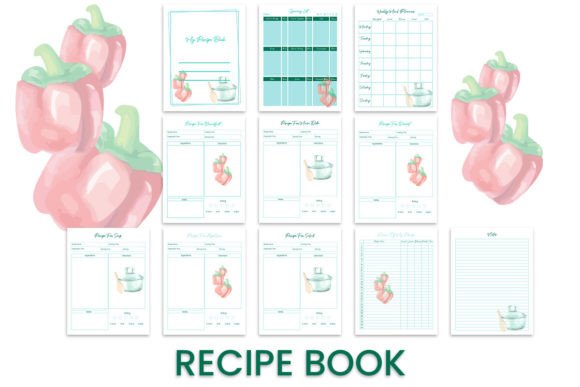
When you first interact with the 2024 Recipe Book Planner, the aesthetic is immediately apparent. It avoids the cluttered, overly decorative look of generic stationery. Instead, it embraces a clean, modern typography approach that prioritizes white space and readability. The layout is intuitive, designed to guide your eye naturally from the title down through the ingredients list and into the step-by-step directions. This isn't just about looking good; it’s about visual hierarchy. The design ensures that when you revisit a recipe months later, you can scan the page effortlessly without squinting at cramped handwriting or disorganized notes.
The personality of this planner is one of quiet professionalism. It doesn't scream for attention with loud graphics, which makes it the perfect canvas for your culinary brand. Whether you are a food blogger looking to systematize your content calendar or a small business owner developing a menu for a new café, the visual style adapts to your needs. The design files included—AI, PDF, SVG, and High-Resolution JPEGs—ensure that the visual fidelity remains crisp across any medium. With CMYK color settings and 300 DPI resolution, this planner is print-ready from the moment you download it, ensuring that the ink on the page matches the quality of your digital screen.
Leveraging the Planner for Brand Identity and Publishing
For the entrepreneur or the aspiring publisher, the 2024 Recipe Book Planner serves a dual purpose: internal organization and external brand building. In the realm of editorial design, the way you present information shapes how your audience perceives your authority. Using a structured planner helps you identify patterns in your cooking. Do you favor sans serif simplicity in your presentation, or do you lean toward a more rustic, serif aesthetic? By using this planner to map out your recipes, you are essentially drafting the blueprint for your future packaging design or cookbook layout.
Consider the practical applications for different creatives:
- Content Creators and Bloggers: Use the PDF files to create a digital archive. This allows for easy searching and referencing when you need to update old posts or create "best of" roundups for social media graphics.
- Designers and Marketers: Treat the planner as a design asset library. The SVG files are particularly useful here, as they can be scaled infinitely without losing quality. You can extract specific design elements to create cohesive branding materials, ensuring your brand identity remains consistent from the recipe card to the website header.
- Hobbyists and Crafters: The High-Resolution JPEGs are perfect for printing individual pages. You can print them on cardstock to create physical recipe cards for gifts, adding a layer of handmade value that digital files alone cannot convey.
The versatility of the file formats cannot be overstated. Having access to AI files means that if you are proficient in Adobe Illustrator, you can customize the typography, adjust spacing, or swap out fonts to better match a specific premium font you’ve licensed for your brand. This level of customization transforms the planner from a static tool into a dynamic component of your web design and print ecosystem.
Practical Guidance for Implementation
Integrating the 2024 Recipe Book Planner into your workflow requires a shift in mindset from "jotting down notes" to "curating content." Here is how to get the most out of this resource:
- Evaluate Project Fit: Before you start writing, decide on the ultimate goal of your recipe book. Is it a family heirloom, a commercial product, or a lead magnet for your email list? The 2024 Recipe Book Planner accommodates all these scenarios, but knowing your goal will help you decide how much detail to include in the "notes" sections.
- Typography and Pairings: While the planner comes with its own distinct style, think about how the text you write interacts with the design. If you are handwriting your recipes, choose a pen that offers good contrast against the background. If you are typing digitally into the PDF, consider font pairing. A clean sans serif font for ingredients often pairs well with a script font or handwritten font for the title, creating a balance between legibility and personality.
- Testing and Review: Don't just file the SVG files away. Open them. Look at the visual hierarchy. Does the layout support long, complex recipes with twenty ingredients, or is it better suited for simple three-step dishes? Testing this early prevents frustration later.
- Commercial Licensing Awareness: As a professional, always verify the licensing terms of your design assets. Ensure that your use of the planner—whether for a client project or a commercial product—aligns with the provided license. This protects your business and respects the work of the original creator.
Ultimately, the 2024 Recipe Book Planner is about control. It gives you control over your culinary narrative. It prevents the loss of those fleeting moments of genius in the kitchen and anchors them in a format that is shareable, printable, and professionally viable. Whether you are building a brand identity from scratch or refining an existing one, this planner provides the structural integrity needed to turn a collection of recipes into a cohesive collection.